
417-771-5817
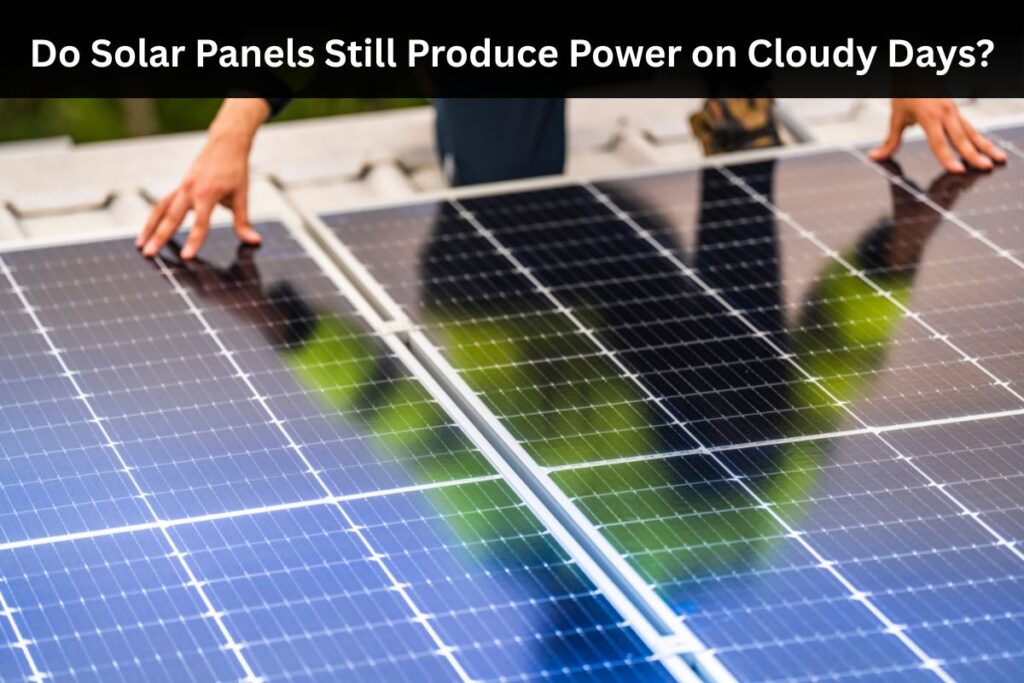
Quick Answer: Yes, solar panels still produce electricity on cloudy days, just at a reduced rate. Light cloud cover can leave output at 50–80% of a clear day, while heavy overcast may drop it to roughly 10–25%. Because annual production depends on the whole year, not one gray afternoon, a well-designed system can still deliver strong savings in cloudy regions.
You’re staring at a gray sky and a quote for a solar system. A reasonable question follows: what exactly am I paying for if the sun isn’t out?
It’s the objection that stalls more solar decisions than almost any other. Property owners assume panels are on-or-off devices that need perfect weather, and then picture a week of gray skies as a week of paying full price to the utility. For a homeowner, that means doubting a major investment. For a facility manager, it can mean a project that never leaves the spreadsheet.
The reality is more useful than either extreme. Cloudy-day output is real, predictable, and already built into any competent production estimate. What matters isn’t whether panels work in clouds. It’s whether the system in front of you was designed around your property’s actual conditions. Here’s how to tell.
How Solar Panels Actually Behave on Cloudy Days
Panels don’t need direct, bright sun to generate power. They respond to light, including the scattered, diffuse light that passes through cloud cover. Clouds reduce the amount of light reaching the panels, but they don’t switch the process off.
Here’s a practical way to think about it:
| Sky Condition | Typical Output vs. Clear Day |
| Clear, direct sun | 100% (baseline) |
| Thin or scattered clouds | Often 60–90% |
| Light to moderate overcast | Often 30–60% |
| Heavy, dark overcast | Often 10–25% |
| Rain with thick cloud | Often 10–20% |
These are general ranges, not guarantees. Actual numbers depend on cloud thickness, the time of day, the season, your panel type, and how the system is configured. A cloud that looks identical from the ground can block very different amounts of light.
Why the Numbers Aren’t as Bad as They Look
Two details surprise most people:
- Diffuse light is still usable light. Even under a thick gray ceiling, a meaningful share of sunlight reaches the ground as scattered light.
- Clouds don’t always hurt. On partly cloudy days, sunlight can briefly reflect off the edges of clouds and push output above normal for short stretches. Installers who monitor systems see this regularly.
Rain Isn’t Only a Bad Thing
Rain generally comes with clouds, so output dips during the storm. But rain also washes dust, pollen, and light debris off the panels. After a storm clears, a system often produces slightly better than it did before.
The Number That Matters More Than Any Single Cloudy Day
Here’s what most solar blogs skip: nobody is evaluating solar based on one day of weather. Your savings come from annual production, the total energy your system makes across twelve months of sun, clouds, rain, and snow.
Solar designers estimate this using historical weather data for your location, usually expressed as “peak sun hours.” Missouri, for example, typically sees roughly 4.5 to 5 peak sun hours per day on average across the year. That average already includes cloudy days, wet springs, and short winter days. It isn’t a sunny-day number.
That’s why a cloudy week doesn’t ruin a solar investment, just as one cold day doesn’t make a thermostat ineffective. The question is the yearly total.
Proof That Cloud Cover Doesn’t Kill Solar
Germany is a useful example. It has a famously overcast climate, yet it has been one of the world’s largest solar adopters for years. Cloudy weather reduces output, but it doesn’t remove the value.
Is My Property Still a Good Fit if We Get Cloudy Weather?
This is the real decision-stage question. Cloud cover is rarely what makes or breaks a project. These factors usually matter more.
1. Shading
A single tree, chimney, or neighboring building can cost you more annual production than an entire season of clouds. Shade is local and predictable, which makes it both more damaging and more fixable. An installer should model it, not eyeball it.
2. Roof Orientation and Tilt
In Missouri and across the region, south-facing roofs generally capture the most energy, but east- and west-facing roofs can still perform well. A west-facing array can even line up better with late-afternoon electricity use. Tilt matters too, and flat commercial roofs allow racking to be set at an optimal angle.
3. Roof Condition and Age
If a roof needs replacement in five years, the solar conversation should include that timeline now. Installing over a roof near end-of-life creates avoidable cost later. This is one of the most common surprises homeowners don’t hear about until late in the process.
4. Your Actual Electricity Use
Savings depend on how much you consume and when. A home in Springfield with high summer air-conditioning use has a very different profile from a Columbia office that runs mostly weekdays. Cloudy days matter less when your system is sized to your real consumption pattern.
5. Your Utility’s Billing Structure
How your utility credits excess production affects how much a cloudy stretch costs you, if at all. Understanding net metering rules, rate structures, and demand charges is part of an honest evaluation.
What Experienced Installers Notice That Most Blogs Don’t Mention
This is where real-world experience separates a useful estimate from a generic one.
Temperature works in your favor. Panels lose efficiency as they get hot. Cool, cloudy-but-bright days can partially offset reduced light, and cold, clear days often produce some of the highest output per hour of the year. A scorching July afternoon isn’t automatically your best production day.
The “worst-case month” shouldn’t drive the decision. Winter in the Midwest brings shorter days, lower sun angles, and more overcast skies. Production drops. But summer overproduction often balances it. A sound proposal shows month-by-month output, not just an annual headline.
Two quotes can describe different realities. If one quote predicts significantly more production than another for the same roof, ask how each was calculated. Differences usually come from shading assumptions, panel specifications, system losses, or optimistic weather data. This is one of the biggest reasons quotes vary.
Equipment design affects partial shading and cloud variability. Some systems use microinverters or optimizers so that one shaded or underperforming panel doesn’t drag down the rest. Whether that’s worth the added cost depends on your roof. It’s a design decision, not a universal answer.
Monitoring changes how you experience weather. With a monitoring app, you see output in real time. Owners often discover their system is quietly producing on days they assumed it wasn’t. It also flags real problems, like a failed inverter, that clouds would otherwise hide.
Residential vs. Commercial: How Cloudy Weather Plays Out
For Homeowners
Most households care about total bill reduction and energy independence over the year. A family in Bentonville or Rogers, Arkansas, for example, doesn’t need every day to be sunny. They need the annual numbers to reduce their reliance on the grid. A cloudy week means higher grid use for that week, offset during sunnier stretches.
Questions worth asking:
- How was my production estimate calculated?
- What does the monthly breakdown look like?
- What assumptions did you make about shading?
For Business Owners and Facility Managers
Commercial properties often have large, flat roofs, daytime-heavy loads, and predictable operating hours. That combination can make solar more attractive, because the energy is used while panels are producing.
Consider a manufacturing facility near Joplin or a retail property in Kansas City. Their daytime consumption pattern means a good share of solar production is used on-site, even on partly cloudy days. That makes cloudy-day dips less of a concern than the overall match between production and operating hours.
For commercial decision-makers, key evaluation factors include:
- Daytime vs. nighttime energy use
- Demand charges and peak usage
- Roof structure, age, and available space
- Long-term plans for the building
Learn more about how we approach larger properties through our commercial solar installation services.
Real-World Scenarios
Scenario 1: The St. Louis homeowner with a gray winter.
A homeowner is worried because December and January are consistently overcast. A good proposal shows lower winter output, then higher spring and summer output. Evaluated across twelve months, the system still meets its purpose. The owner just needs to know winter bills won’t drop to zero.
Scenario 2: The Branson business with seasonal demand.
A tourism-related business has heavy summer usage, when production is also strongest. Cloud cover on a given afternoon matters far less than the strong alignment between its peak demand and peak sunlight.
Scenario 3: The Edwardsville property with one big tree.
The homeowner asks about cloudy days, but the real issue is a mature tree shading the south roof from noon onward. A shading analysis shows the tree costs more annual production than the local climate does. The right fix may be trimming, relocating panels, or choosing equipment better suited to partial shade.
Why Quotes Vary (And What to Ask)
Cloud-related assumptions are one of several reasons solar quotes differ for the same property. When comparing proposals, look at:
- Production estimate methodology. Is it based on local weather data and a site-specific shading analysis, or a generic average?
- System size and panel specifications. Larger isn’t automatically better, and a smaller system might fit your consumption well.
- Equipment choices. Inverter type, panel quality, and warranties affect long-term performance.
- Installation approach. Roof condition, wiring runs, and structural requirements change the scope.
- Monitoring and support. What happens after installation if production dips?
A trustworthy installer will walk you through these openly, even when the answers aren’t flattering to the sale.
How to Evaluate Solar Realistically: A 6-Step Checklist
- Gather 12 months of electricity bills. This shows your real consumption pattern.
- Inspect your roof’s age and condition. Plan around any upcoming replacement.
- Identify shading sources. Trees, nearby buildings, vents, and chimneys all count.
- Ask for a month-by-month production estimate, not just an annual figure.
- Compare proposals on method, not just price. Ask how production was calculated.
- Request a site assessment. An on-site evaluation catches issues remote estimates miss.
Common Myths About Cloudy-Day Solar
Myth: Solar only works in hot, sunny places.
Panels respond to light, not heat. Cooler temperatures can actually help efficiency.
Myth: Cloudy weather makes solar a bad investment.
Production estimates already include typical cloud cover. What matters is your annual output relative to your energy use.
Myth: Rain damages panels or shuts them down.
Panels are built for outdoor weather, and rain often cleans them.
Myth: I need batteries to benefit on cloudy days.
Not necessarily. Many systems stay grid-connected, drawing from the grid when production is low. Whether storage makes sense depends on your goals, such as backup power, and is a separate decision.
Where We Serve
Weather conditions vary across the Midwest, from Springfield and Jefferson City to Fayetteville, Belleville, and Eureka, Kansas. Local climate, utility structure, and property type all shape what a good system looks like. You can see the communities we work in on our service area page.
Ready to See What Solar Would Actually Produce at Your Property?
Weather is one input among many. The most useful next step is a property-specific look at your roof, shading, energy use, and goals, so the numbers reflect your site and not a national average.
Our team offers solar assessments and energy analyses for homes, businesses, and larger facilities. If you’re weighing residential solar installation or a commercial solar installation, we can walk you through realistic production expectations, including the cloudy months.
Request a consultation to schedule your property evaluation.
FAQ
Do solar panels work on cloudy days?
Yes. Panels generate electricity from diffuse light, so they keep producing under cloud cover. Output is lower than on clear days, often between 10% and 80% depending on how thick the clouds are.
How much power do solar panels produce on a cloudy day?
Light clouds may reduce output only modestly, while heavy overcast can bring it down to roughly 10–25% of clear-day production. Your system’s estimate should reflect these variations over the full year.
Do solar panels work in the rain?
They do, though output drops because rain typically accompanies heavy cloud. Rain can also help by rinsing dust and debris off the panels.
Is solar worth it in a cloudy climate?
It can be. Value depends on annual production, your electricity use, shading, roof condition, and system design, not just the number of cloudy days. A site assessment is the best way to know.
Do solar panels work in winter?
Yes. Winter production is lower because of shorter days, a lower sun angle, and more cloud, but cold temperatures help panel efficiency, and snow often slides off tilted panels.
Do solar panels work at night?
No. Panels need light to generate electricity. At night, a grid-connected property draws from the utility, or from a battery if one is installed.
Will cloudy weather make my solar estimate inaccurate?
A good estimate already accounts for typical local weather. Individual months can vary, but annual production tends to be consistent. Ask your installer how the estimate was built.