
417-771-5817
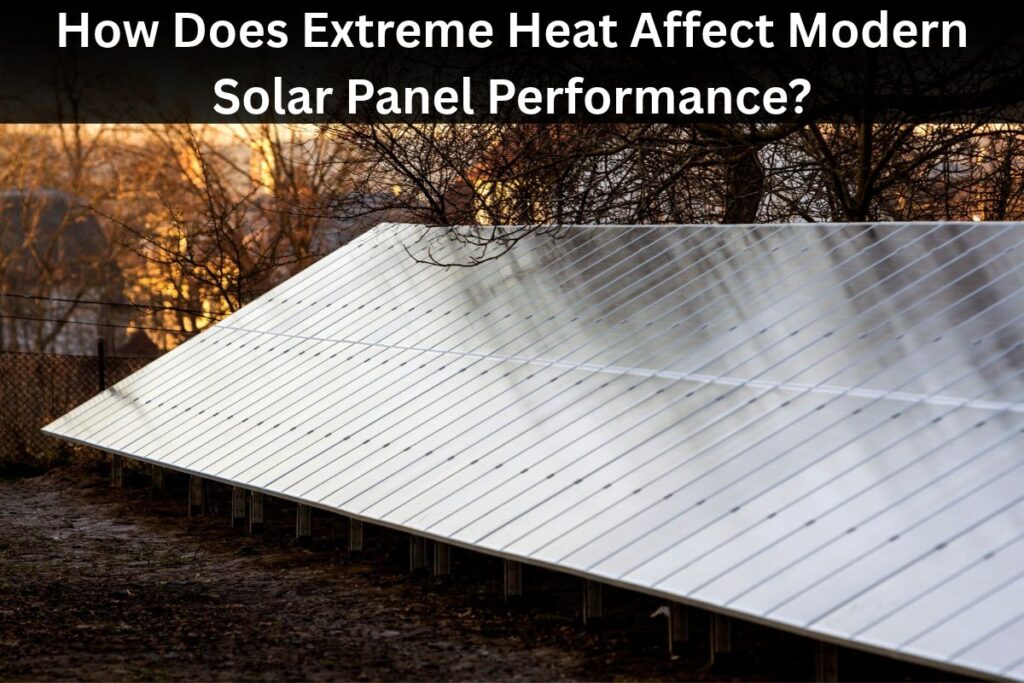
Yes, solar panels lose a little efficiency in extreme heat, but the effect is smaller than most people fear. Output typically dips roughly 0.25% to 0.40% for every degree Celsius above 25°C (77°F) at the cell level. The loss is temporary, concentrated in late afternoon, and already built into how a properly designed system is sized.
Why the “Hot Panels Don’t Work” Worry Feels So Reasonable
You’ve probably seen it: a July afternoon in Missouri, 98°F outside, and a neighbor mentions their panels “aren’t producing like they did in May.” Or you’re a facility manager looking at a flat roof that feels like a griddle by 3 p.m., wondering whether covering it with panels is a smart investment or a slow-motion mistake.
The concern is legitimate, and it’s not a myth. It’s physics. But here’s what most articles skip: the hottest days are not when solar fails. They are when your air conditioning runs hardest and your utility bills climb. If heat quietly erased production on those days, solar would make no sense in the Midwest, in Arkansas, or anywhere summer gets serious.
It does make sense, because the real story is about how much power is lost, when it’s lost, and what a good design does about it. Understanding that difference is what separates a confident decision from a nervous one. This guide walks through it in plain English, from the perspective of someone who has seen what hot roofs actually do to real systems. If you’re early in your research, our overview of solar energy systems is a good companion read.
What Actually Happens to a Solar Panel When It Gets Hot
Solar panels turn light into electricity, not heat into electricity. Sunlight is the fuel. Heat is a side effect that slightly reduces how efficiently the panel converts that fuel.
Electrically, the panel’s voltage drops as the cells warm up. Current rises a tiny bit, but not enough to offset the voltage loss. The net result is lower power output. Think of a runner on a 95°F day: same training, same effort, slightly slower pace.
Two points matter here:
- Panel temperature is not air temperature. A panel sitting in direct sun typically runs 20°C to 30°C (roughly 35°F to 55°F) hotter than the surrounding air. On a 95°F day, cell temperatures can reach 150°F or more.
- The loss is partial, not total. Heat reduces output by a percentage. It does not switch panels off.
The Number That Matters Most: The Temperature Coefficient
Every panel carries a rating on its spec sheet called the temperature coefficient of power (sometimes labeled Pmax). It tells you how much output the panel loses for each degree Celsius above 25°C, the standard test temperature.
A lower (less negative) number is better.
| Panel Technology (typical range) | Temperature Coefficient | Heat Performance |
| Older or standard PERC modules | about -0.34% to -0.40% per °C | Adequate |
| Modern N-type TOPCon modules | about -0.29% to -0.32% per °C | Good |
| Heterojunction (HJT) modules | about -0.24% to -0.27% per °C | Very good |
A quick, real-world example. Say a panel has a coefficient of -0.30% per °C and its cells reach 65°C (149°F) on a hot afternoon. That is 40°C above the 25°C test condition. The estimated loss is 40 × 0.30% = about 12% of rated output at that moment.
That sounds significant until you put it in context. It applies only during the hottest hours, and sunlight intensity, not temperature, drives most of your annual production. Over a full year, heat typically trims production by a modest single-digit percentage in hot climates, and that estimate is already part of a professional production model.
What an installer notices that most blogs miss: the coefficient is only one input. A panel with an excellent coefficient installed flat against a dark roof with no airflow can run hotter than a panel with an average coefficient installed with proper ventilation. Hardware specs matter, but installation matters just as much.
Do Solar Panels Produce More in Summer or Spring?
Many property owners are surprised to learn that spring can be a system’s best production season, even though summer has longer days and higher sun.
Why? Spring offers strong sunlight with cooler panel temperatures and often clearer, less humid air. A crisp 70°F April day in Columbia or Jefferson City can produce a better output per panel than a muggy 97°F August afternoon, even though August has more total daylight.
That said, summer is still a high-production season overall, because the sun is up longer and positioned favorably. Production is typically strong from spring through early fall.
This is also why you should be cautious about reading a single hot-day output number and judging the system. A fair evaluation looks at monthly and annual production against the system’s expected performance, not one 4 p.m. reading in July.
When Heat Matters Most (and When It Doesn’t)
Heat has the biggest effect:
- During mid-to-late afternoon in July and August
- On rooftops with little airflow underneath the panels
- On dark, heat-absorbing roofing materials
- In humid regions where the air doesn’t cool surfaces well overnight
Heat has the smallest effect:
- In the morning and early evening
- In spring and fall
- On well-ventilated ground mounts and properly raised roof mounts
- On sunny, breezy days (wind is a natural cooling system)
For homeowners, this means the afternoon dip is part of the normal rhythm, not a defect. For businesses, it’s worth noting that the heat-affected window overlaps with peak electricity demand, which is exactly when solar production still offsets a meaningful share of consumption.
How Mounting and Roof Type Change Heat Performance
This is where experience separates a good proposal from an average one.
Air gap under the panels. Standard rooftop racking leaves a few inches of space beneath the panels. That gap lets air circulate and carries heat away. A tighter gap, or panels mounted nearly flush, can raise operating temperatures noticeably. A design that respects airflow helps long-term output.
Roof material and color. Dark asphalt shingles absorb and radiate heat. Metal roofs reflect more and can run cooler, though specifics depend on the roof profile and mounting method. Neither is “bad,” but each changes the thermal picture slightly. If you’re planning a roof replacement before going solar, that decision deserves attention. Our guide on residential solar installation explains how roof condition and layout shape a project.
Flat commercial roofs. Large flat roofs often use low-tilt racking, and many are covered in dark membranes or have heat radiating from rooftop equipment. Spacing, tilt, and row layout all affect ventilation. For a building in St. Louis or Kansas City with a large HVAC footprint on the roof, a site assessment should account for localized heat from mechanical units. If you manage a commercial property, our commercial solar installation page outlines how we approach these layouts.
Ground mounts. Ground-mounted arrays have air flowing around the front and back of the modules, so they typically run cooler. They require space and have different cost considerations, but for rural properties in places like Eureka, Kansas, or outside Springdale, Arkansas, they can be an effective option.
Inverters, Wiring, and the Parts Everyone Forgets
Panels aren’t the only components that feel the heat.
Inverters convert the panels’ DC electricity into the AC your property uses. They have an operating temperature range, and when internal temperatures climb too high, many inverters reduce output to protect themselves. This is called derating. An inverter mounted on a sun-baked west wall with no shade can derate on hot afternoons even when the panels themselves are fine.
Installer-level considerations include:
- Mounting inverters in shaded, ventilated locations
- Choosing equipment rated for the temperatures your property actually experiences
- Sizing wire and conduit with heat in mind, since conductor resistance rises as temperatures climb
- Matching the number of panels per string to the inverter’s voltage window, accounting for both summer heat (lower voltage) and winter cold (higher voltage)
String inverters vs. microinverters. Microinverters sit under each panel and can tolerate high temperatures well in most designs, but they also live on the hot roof. String inverters are typically installed in cooler locations but affect the whole array if something goes wrong. Neither is universally better. The right choice depends on your roof, shade conditions, and budget.
Are “Heat Resistant Solar Panels” Real?
The phrase is a marketing shorthand, and it’s useful to know what it really means. No panel is immune to heat. “Heat resistant” generally refers to a combination of:
- A low temperature coefficient (small power loss per degree)
- A lower operating temperature rating (often listed as NOCT, which estimates how hot the cells get under typical conditions)
- Construction quality that handles repeated heating and cooling without damage
When comparing quotes, ask for the datasheet and look for these numbers. If a proposal uses vague language like “built for extreme heat” without listing the temperature coefficient, ask for the number. That’s a fair and normal request.
Does Heat Shorten the Life of Solar Panels?
Short answer: heat can influence long-term aging, but quality panels are designed and tested for it.
The bigger concern is thermal cycling: panels heat up in the afternoon and cool at night, thousands of times over decades. Over years, this expansion and contraction can stress materials, particularly in lower-quality products or poorly installed systems. Reputable manufacturers test panels for this, and production warranties typically guarantee that output stays above a defined percentage for 25 years or more.
This is one reason the warranty details deserve attention. Look at the degradation guarantee and what’s covered, not just the headline number. And if you’re curious about the long end of the timeline, we cover it in our article on what happens to old solar panels when they reach end of life.
What Heat Means for System Sizing and ROI
This is the question that matters most to a buyer: does heat change whether solar pays off?
In most cases, it doesn’t change the answer, but it changes how the system should be designed. A good proposal builds temperature losses into the production estimate from the start. That means the number you see for expected annual output is already net of heat effects.
Where proposals can go wrong:
- Production estimates that ignore temperature. If the estimate looks unrealistically perfect, ask how heat was modeled.
- Undersized systems. If a home in Joplin or a business in Branson has high summer cooling loads, the system should be sized for real consumption, not just a rough average.
- Ignoring seasonal usage. A restaurant, a school, a warehouse, and a family of five each have different load shapes. Heat affects production in the same hours that air conditioning drives consumption.
For homeowners wondering how many panels they need to cover household usage, our article on whether solar can power a whole house (link to live blog URL) walks through the factors that determine system size.
Real-World Scenarios
Scenario 1: A homeowner in Springfield, MO. A family with a south-facing asphalt shingle roof has summer electric bills that spike from air conditioning. Their concern is that production will collapse in July. In practice, the system produces somewhat less per panel on 100°F afternoons, but still generates substantial energy during the hours their AC runs hardest. The mounting design leaves proper airflow, and the production estimate already accounts for heat, so the annual numbers hold.
Scenario 2: A facility manager in Kansas City. A warehouse has a large flat membrane roof with rooftop HVAC units. During assessment, the team notes that heat radiating near the units could raise local panel temperatures, so the layout is adjusted for spacing and ventilation. The result is a more realistic production model and fewer surprises after installation.
Scenario 3: A rural property owner near Fayetteville, AR. With open land available, a ground-mounted system keeps panels cooler through better airflow and is easier to maintain. The owner trades some extra site preparation for improved thermal behavior.
A Practical Checklist: What to Ask Before You Sign
Use these questions when evaluating any solar proposal:
- What is the temperature coefficient of the panels you’re recommending?
- How was heat factored into the production estimate?
- How much airflow will there be beneath the panels on my roof type?
- Where will the inverter be installed, and is that location shaded and ventilated?
- What does the performance warranty guarantee, and for how long?
- Does the system size reflect my actual summer energy use?
- Has my roof’s condition and remaining life been evaluated?
If an installer can answer these clearly, that’s a good sign. Vague answers deserve follow-up.
Common Myths About Solar and Heat
“Solar works best in the hottest places.” Not exactly. Solar needs strong sunlight, not high temperature. Cooler, sunny conditions are ideal.
“Hot days mean my system is broken.” A modest afternoon dip is normal. Compare monthly output to the expected production, not a single reading.
“Cheaper panels perform the same in heat.” Not always. Temperature coefficients differ by product, and the difference can be meaningful over many hot afternoons.
“Heat will ruin my panels in a few years.” Quality panels are tested for temperature stress, and long-term warranties exist for this reason.
How Heat Fits Into the Bigger Decision
Heat is one of many factors that shape solar performance. Roof orientation, shading, system size, equipment quality, installation practices, and your energy usage patterns usually matter more for your savings and long-term value. A system that’s thoughtfully designed will produce reliably through Missouri’s humid summers, Arkansas heat, and Illinois and Kansas swings between seasons.
The best way to know how a system would perform on your property is a site-specific evaluation, not a generic estimate.
Plan Your Solar Project With Confidence
If you’re considering solar for your home or business, the next step is understanding how a system would perform in your specific conditions: your roof, your shading, your energy use, and your summer heat.
Solera Energy offers solar assessments and energy analysis for homeowners, business owners, and property managers across Missouri, Arkansas, Illinois, and Kansas. You can see our service area to learn where we work, then request a consultation to talk through your property. There’s no pressure, just clear information about whether solar makes sense for you.
Frequently Asked Questions
Do solar panels work in extreme heat?
Yes. They continue producing electricity in very hot weather, though output per panel dips slightly as cell temperatures rise. Systems are designed with this in mind.
At what temperature do solar panels become less efficient?
Efficiency declines gradually once cells go above about 25°C (77°F). There’s no sharp cutoff. The loss is proportional to how much hotter the cells get.
What is a good temperature coefficient for solar panels?
Closer to zero is better. Many modern panels fall between about -0.24% and -0.35% per °C. Check the datasheet for the exact figure.
Can solar panels overheat?
Panels are built to operate at high temperatures and are tested for it. Extreme heat can reduce output, and poorly ventilated installations may run hotter, but properly designed systems are made to handle it.
Do solar panels produce more in summer or spring?
Summer has longer days, but spring often delivers very strong per-panel performance because of cooler temperatures. Overall production is typically strong from spring through early fall.
Does heat shorten solar panel lifespan?
Repeated heating and cooling can contribute to gradual aging, but quality panels are tested for it and backed by long-term performance warranties.
Are ground-mounted panels cooler than rooftop panels?
Often yes, because air circulates around the modules more freely. The right choice still depends on available space, budget, and site conditions.
Should I choose panels based on the temperature coefficient alone?
No. It’s one useful factor. Installation quality, mounting design, system size, inverter choice, and warranty terms matter too.