
417-771-5817
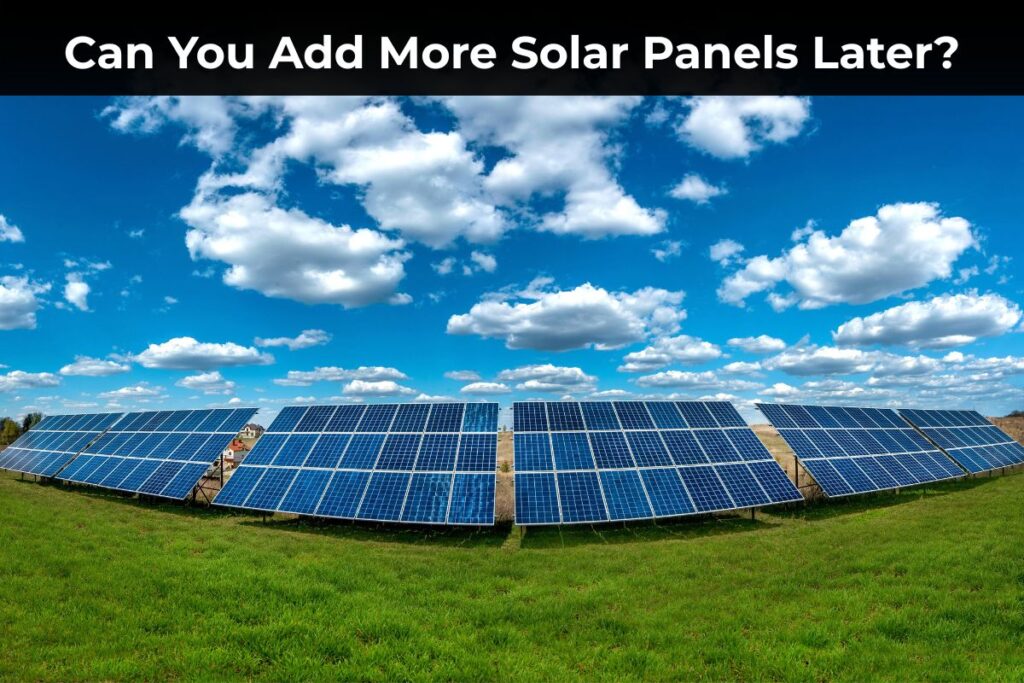
Yes, you can typically add more solar panels to an existing system later – but it’s rarely as simple as bolting on extra panels. Your ability to expand depends on your inverter’s spare capacity, remaining roof or ground space, your electrical panel’s headroom, and your utility’s interconnection rules. Property owners who plan for future expansion before their first installation avoid the most expensive surprises.
Someone tells you they’re “starting small” with solar – a handful of panels now, more later once the system proves itself or the budget allows. It sounds reasonable. Ease into it, see the savings, expand when it makes sense.
Then, a year or two later, they call a solar company to add capacity and hear something they didn’t expect: the inverter can’t handle more panels, the roof space they were counting on has a shading problem nobody flagged before, or the utility’s interconnection agreement has to be redone from scratch. What looked like a simple add-on turns into a partial system redesign with a bill to match.
This happens more often than most homeowners and business owners realize, and it’s rarely explained clearly before the first system goes in. The good news: expanding a solar system later is absolutely possible, and in the right circumstances it’s a smart, budget-friendly way to approach solar. The key is understanding what actually determines whether an expansion is simple or expensive and asking the right questions before, not after, your first installation.
This article walks through what really affects your ability to add solar panels later, how residential and commercial situations differ, and what an experienced installer looks at before ever giving you a straight answer.
Why “Add Panels Later” Isn’t a Simple Yes or No
Solar systems aren’t built like Lego sets where every piece just clicks onto the next. Four factors typically decide whether a future expansion is straightforward or requires significant rework:
- Inverter capacity — the inverter converts the power your panels generate into usable electricity, and it has a maximum load it can handle. If it was sized exactly for your original panel count, there’s no room to add more without upgrading or adding a second inverter.
- Available space — roof area, orientation, and shading (or, for ground-mount and commercial sites, available land or rooftop square footage) determine whether there’s physically room to expand.
- Electrical panel headroom — your home or building’s main electrical panel needs enough spare capacity to accommodate additional solar circuits.
- Utility interconnection rules — utilities require systems to be reviewed and approved, and many treat an expansion as a new interconnection request, not a minor update.
Any one of these can turn a “simple add-on” into a project that looks a lot like starting over.
Residential vs. Commercial: Different Expansion Challenges
For homeowners, the most common limiting factor is roof space combined with inverter sizing. A homeowner in Springfield or Columbia, Missouri, who installs a modest system to cover current usage may find a few years later that an electric vehicle, a home addition, or a switch to electric heating has significantly increased consumption. If the original system was sized tightly to the household’s needs at the time, there’s often no spare inverter capacity and depending on roof orientation, not always obvious space for more panels either.
For businesses, the calculus is different. Facility managers and business owners often deal with:
- Changing equipment loads as operations grow (added machinery, expanded refrigeration, added HVAC zones)
- Multi-building or multi-phase properties where solar was only installed on one structure
- Commercial roof space that’s shared with HVAC units, skylights, or future construction plans
- Utility rate structures that make timing an expansion strategically important
A business in Bentonville or Fayetteville, Arkansas planning a facility expansion in two years has a very different set of considerations than a homeowner adding panels for a pool heater. Commercial systems typically justify a more deliberate, phased design approach from day one, because the stakes and the equipment involved – are larger.
For Missouri businesses, that broader shift toward commercial solar makes future-ready planning especially relevant. As more businesses evaluate solar for their facilities, understanding how today’s installation can accommodate tomorrow’s energy needs becomes an important part of the planning process. See why Missouri businesses are installing solar faster than ever!
What Determines Whether Expansion Will Be Easy or Expensive
1. How the Original System Was Sized
Most solar companies size a system to match current energy consumption as closely as possible, which keeps upfront costs down. That’s often the right call financially but it also means the inverter, wiring, and electrical panel connections are usually built with just enough capacity for what’s there, not what might come later.
The quality of the original installation matters, too. Proper system sizing, electrical planning, equipment selection, and documentation can make a major difference if you eventually decide to expand. Learn why professional solar installation matters more than you think!
An experienced installer will ask, before the first system ever goes in, whether you’re planning any of the following in the next 3–7 years:
- Adding an electric vehicle or a second EV
- Expanding the building or finishing additional square footage
- Adding a pool, hot tub, or workshop
- Increasing equipment loads (for commercial properties)
- Adding battery storage down the line
If any of those are even a possibility, it’s worth discussing “future-ready” design – even if you’re not paying for the extra capacity yet.
2. Inverter Type Matters More Than Most People Realize
Not all inverter setups expand the same way.
| Inverter Type | Expansion Difficulty | Common Scenario |
| String inverter (sized tightly) | Often requires replacement or a second inverter | Homeowner who added an EV after installing a minimal system |
| String inverter (oversized/future-ready) | Straightforward – spare capacity already exists | Homeowner who discussed future plans during initial design |
| Microinverters | Generally easier to expand incrementally | Adding a few panels without touching the whole array |
| Commercial three-phase inverter | Expansion depends heavily on original load calculations | Business adding a second building or expanding equipment |
This is one of the most overlooked decisions in an initial solar consultation and one an experienced installer should walk you through, not just default to whatever produces the lowest quote.
3. Roof Condition and Remaining Lifespan
Adding panels to a roof section that’s approaching the end of its service life is a mistake many property owners don’t think about until it’s too late. If your roof will need replacement within 5–10 years, an installer should factor that into both your original design and any future expansion conversation because removing and reinstalling panels to replace roofing underneath is an avoidable expense if it’s planned for early.
4. Utility Interconnection Requirements
This is the factor most homeowners and even some business owners don’t anticipate. Utilities across Missouri, Arkansas, Illinois, and Kansas each have their own interconnection processes, and in many cases, adding capacity to an existing system requires a new or amended interconnection application not a simple notification. Depending on the utility and the size of the addition, this can involve:
- A new engineering review
- Updated metering requirements
- Processing timelines that stretch from weeks to a few months
None of this is a dealbreaker, but it’s a real part of the timeline that’s easy to underestimate if you assume “adding panels” is a same-week job.
The Hidden Costs of Expanding Later (That Nobody Mentions Upfront)
Property owners are often quoted a low upfront price for a minimal system without being told what expansion could cost down the line. Here’s what tends to add up:
- New inverter or a second inverter unit, if the original has no spare capacity
- Electrical panel upgrades, if there’s no headroom for additional circuits
- A second utility interconnection process, with its own fees and timeline
- Mismatched equipment, if the original panel model is discontinued and a new expansion uses a different panel type (which can affect appearance and, in some cases, performance balance across the array)
- Additional labor for accessing and modifying existing wiring, rather than a clean, continuous installation
None of these costs are unreasonable on their own but stacked together, they can make “starting small and adding later” more expensive than designing a right-sized, future-ready system from the beginning.
If you’re currently comparing whether to install a full system now or start smaller, it’s worth having this conversation directly with whoever is designing your residential solar installation or commercial solar installation – before a single panel goes on the roof.
How to Set Yourself Up for an Easy Expansion Later
If you know you’ll likely want to expand but aren’t ready to install a full system today there are practical ways to make future expansion far simpler:
- Ask for an inverter with spare capacity built in. It costs more upfront but can save significantly on expansion later.
- Have your installer document remaining roof or site capacity during the original site assessment, not just what’s being used now.
- Confirm your electrical panel has room for additional circuits, or plan for a panel upgrade now while electrical work is already underway.
- Ask how your utility treats system expansions so you know what timeline to expect if you do add capacity later.
- Keep documentation of your original system’s specifications– model numbers, inverter capacity, and site assessment notes so a future installer isn’t starting from zero.
Is It Better to Oversize a System From the Start?
For many homeowners and businesses, yes within reason. Oversizing slightly, or at minimum choosing equipment with room to grow, tends to be more cost-effective than a two-phase installation, because:
- You avoid a second round of permitting, interconnection, and labor mobilization
- Equipment pricing and technology don’t have time to shift between phases
- You get economies of scale on installation labor by doing it once
That said, oversizing isn’t automatically the right call for every property. A business planning a facility expansion in the next year has a different answer than a homeowner with no planned changes to their consumption. This is exactly the kind of property-specific evaluation a proper site assessment is meant to sort out – generic advice can’t tell you whether it’s worth it for your specific roof, panel, and load situation.
Real-World Scenarios
Scenario 1 — Homeowner in Joplin, MO: Installed a modest system sized to current usage. Two years later, added an EV. Because the original inverter had zero spare capacity, expansion required a second inverter and additional roof-mounted panels on a section that hadn’t been part of the original design – adding cost and complexity that could have been avoided with a slightly larger initial inverter.
Scenario 2 — Small business in Edwardsville, IL: Worked with their installer during the original design phase to size the electrical panel and inverter with room for a planned future expansion of their retail space. When that expansion happened 18 months later, adding panels to cover the new square footage was a straightforward addition – no new interconnection headaches, no mismatched equipment.
Scenario 3 — Property manager overseeing multiple buildings near Kansas City, MO: Phased solar across two buildings intentionally, treating each as its own project but planning the electrical infrastructure to support a shared expansion strategy over time. This is common for facility managers managing multi-building commercial solar rollouts.
Frequently Asked Questions
Can you add more solar panels to an existing system?
In most cases, yes — but it depends on your inverter's remaining capacity, available roof or site space, your electrical panel's headroom, and your utility's rules for approving system expansions.
Does adding solar panels later cost more than doing it all at once?
Often, yes. Expansion can involve a new or upgraded inverter, additional utility interconnection paperwork, and separate labor mobilization — costs that are typically avoided when a system is sized correctly the first time.
Do I need a new inverter to add solar panels?
Only if your existing inverter doesn't have spare capacity for the additional panels. Some setups, like systems using microinverters, tend to expand more easily than tightly sized string inverter systems.
How do I know if my roof can support more panels later?
A site assessment during your original installation should document total usable roof space versus what's actually being used — this tells you exactly how much room exists for future expansion.
Is it better to oversize a solar system from the start?
For many properties, yes, because it avoids the cost and delay of a second installation phase. Whether it makes sense for your specific property depends on your roof, equipment, and future plans — which is best evaluated with a proper site assessment.
Ready to Plan a System That Grows With You?
Whether you’re weighing a full installation now or want a system designed with room to expand later, the right answer depends on your specific property, roof, and energy needs. A property evaluation can show you exactly what your options look like – see if we serve your area and request a consultation to talk through what makes sense for your situation and get a free quote.